Roofers in Bramhall
Roofers in Bramhall
Bramhall's one of those areas where no two streets are quite the same — you've got Victorian villas near the village centre, mock Tudor semis on the estates that went up either side of the wars, and modern infill and extensions dotted throughout. That mix means the roofing here isn't one-size-fits-all, and it's why we quote differently for a re-slate on Bramhall Park Road to what we'd quote for a flat roof extension on a 90s build off Moss Lane.
We're based just up the road in Offerton, so Bramhall's core patch for us — quick to get scaffolding on site, easy to pop back for a snag, no call-out premium for being "too far."
Roofing Bramhall by property age
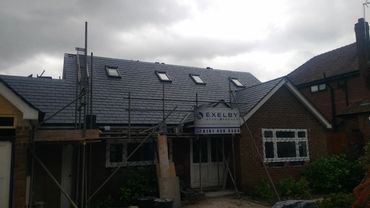
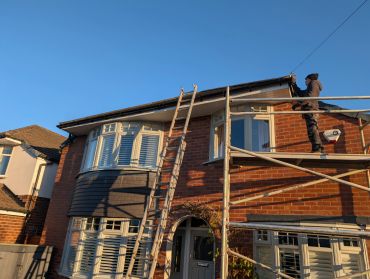
Victorian & Edwardian detached homesBramhall's older stock — particularly the substantial detached homes along Bramhall Lane South, Carrwood Road, Bramhall Park Road and Nevill Road, and the Victorian terraces closer to the village centre — dates back to when the railway arrived in the 1840s and the estate was sold off for building plots from the 1870s onwards. These are typically steep-pitched roofs with decorative ridge detailing, tall chimneys, and bay window roofs — most were originally laid in natural Welsh slate. A lot of what we're called out for here is re-slating where the original slate has gone past its natural life, lead valley and flashing repairs around bays and chimneys, and ridge repointing on those tall stacks.
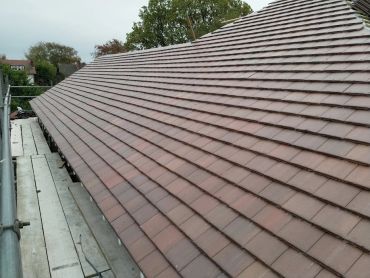
1920s–30s mock Tudor semisBramhall's known for its interwar mock Tudor developments — half-timbered gables, steeper roof pitches, decorative bargeboards — with a good concentration around St Michaels Avenue and the roads running off Bramhall Lane. Most of these were originally roofed in clay or concrete tile rather than slate. By now a good number are on their second or even third roof covering, and we're regularly asked to match existing tile profiles when doing partial repairs, or to fully re-tile where the roof's reached the end of its service life.
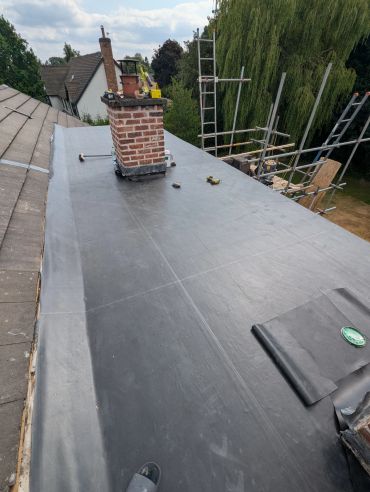
Post-war estatesAreas like the Dairyground, Little Australia and New House Farm developments, and around Midland Road, have a lot of 1950s–60s stock — simpler roof lines, interlocking concrete tiles (Marley/Redland-style), and often a flat-roofed rear extension or garage tacked on at some point. These flat sections are usually where we get called — old felt roofs well past their 15–20 year lifespan, ponding, and soft spots where the deck's started to go.
New builds and modern extensionsNewer infill and extensions across Bramhall — including around Woodford Road, Ack Lane and the smaller side streets off Bramhall Lane like Birchwood Road and Greaves Road — tend to use interlocking concrete or clay tiles on the main roof, but it's the flat roof extensions and orangeries where we do most of our work — warm roof builds with PIR insulation and GRP or EPDM coverings, done properly with falls built in so they're not left holding water.
Common roofing issues we see in Bramhall
- Moss and debris build-up — Bramhall Park and the Ladybrook Valley mean a lot of mature tree cover nearby, which means gutters blocking faster than you'd expect and moss taking hold on north-facing slate and tile roofs.
- Ridge and chimney repointing on the older Victorian and Edwardian stock, where lime or cement pointing has failed after decades of weather.
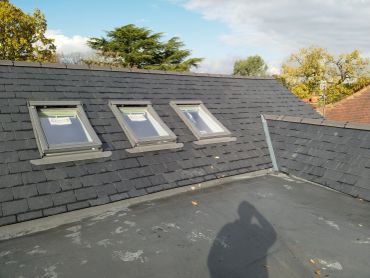
- Failed flat roofs on extensions — old felt or asphalt on garages, kitchen extensions and dormers that's well past its intended lifespan.
- Tile matching on 1930s semis where a partial repair needs tiles that match the original profile and colour.
What we do in Bramhall
- New pitched roofs — slate, clay and concrete tile
- Re-roofing and partial repairs, including tile and slate matching
- Warm flat roof rebuilds — GRP and EPDM, insulated to current Part L standards
- Chimney repointing and lead flashing repairs
- Fascias, soffits and guttering
- Emergency callouts
We're TrustATrader verified with 25+ five-star reviews on Google, and we give you a straight price before any work starts — if something unexpected turns up once we're into the job, you're told and asked before it's added to the bill.
FAQs
Do you work on Victorian slate roofs in Bramhall?Yes — a lot of our work in Bramhall is re-slating and repairing older Victorian and Edwardian roofs, including lead valley and flashing work around bays and chimneys.
Can you match tiles on a 1930s semi?In most cases, yes. We'll identify the tile profile and source a close match for repairs, or advise if a full re-tile is the more sensible long-term option.
Do you cover flat roof extensions?Yes — this is one of the most common calls we get in Bramhall, particularly on post-war estates and newer extensions. We build warm roofs properly, with insulation and falls designed in rather than just overlaying what's there.
How quickly can you get out to Bramhall?Bramhall's part of our core coverage area from Offerton, so we can usually get out for a quote within a few days, faster for emergency callouts.
Areas nearby we also cover: Bramhall Park, Woodford, Cheadle Hulme, Hazel Grove, Davenport, Bramhall Moor.
Roofing Artistry in Motion